



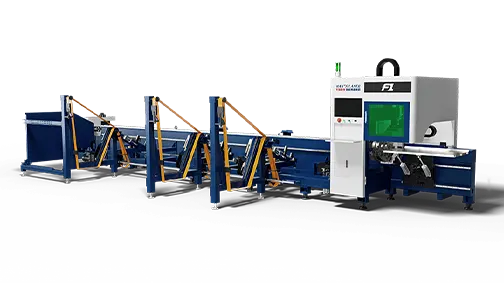
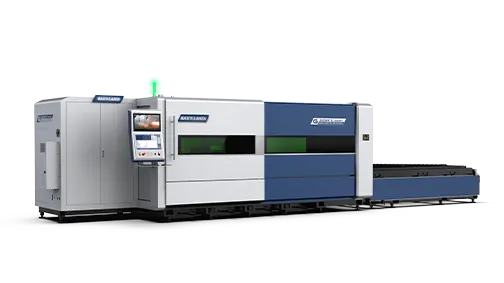

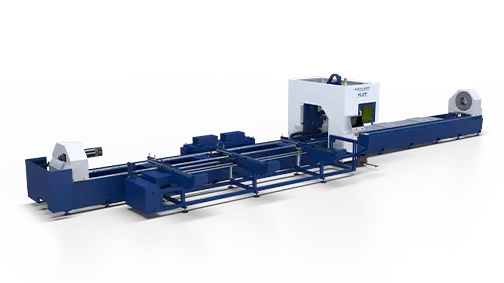


Thanks to their high precision, high efficiency, and high level of automation, laser cutting machines have become essential production equipment in the metalworking industry. However, even the most advanced equipment requires proper maintenance. Standardized daily maintenance not only maintains cutting precision and stability but also reduces equipment failure rates, lowers repair costs, and effectively extends the equipment’s service life.
This guide covers the essential maintenance procedures for laser cutting machine, including pre-startup inspections, daily maintenance, and periodic servicing—to help companies establish a comprehensive equipment maintenance system.
I. Pre-Startup Inspection: Ensuring Safe and Stable Equipment Operation
Before each startup of the fiber laser cutting machine, a standard inspection procedure must be followed to prevent malfunctions or safety incidents caused by equipment abnormalities.
1.Inspect the Cooling System (Water Circuit)
The cooling system directly affects the stable operation of the laser and is one of the most critical pre-startup inspection items.
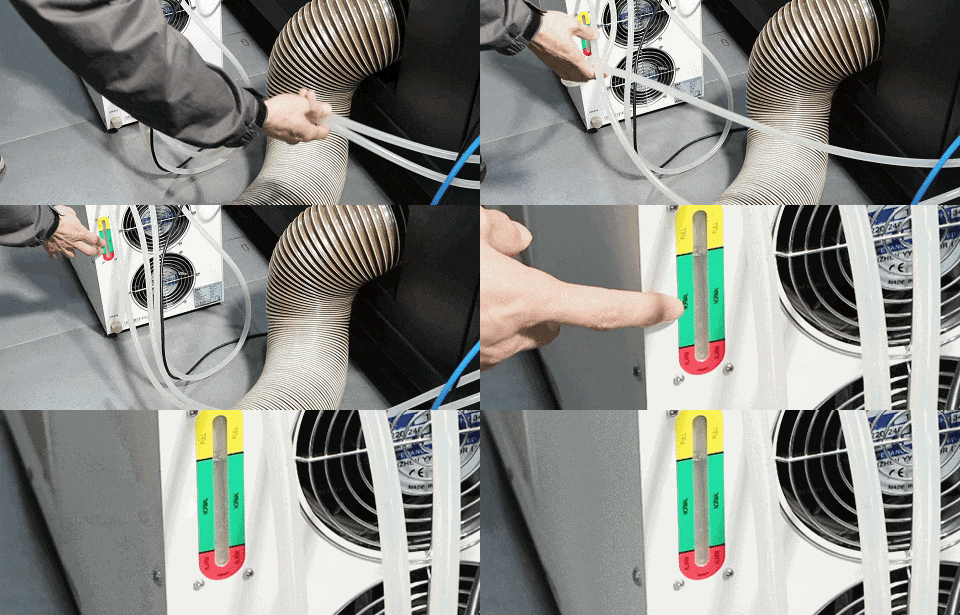
First, check the water level in the laser cutting machine's chiller reservoir to ensure it is within the normal range. Next, inspect the hoses for leaks or loose connections, and ensure all connections are secure to maintain proper coolant circulation. Be sure to clean the inner and outer surfaces of the tank and pipes to ensure there is no damage, kinking, or blockage.
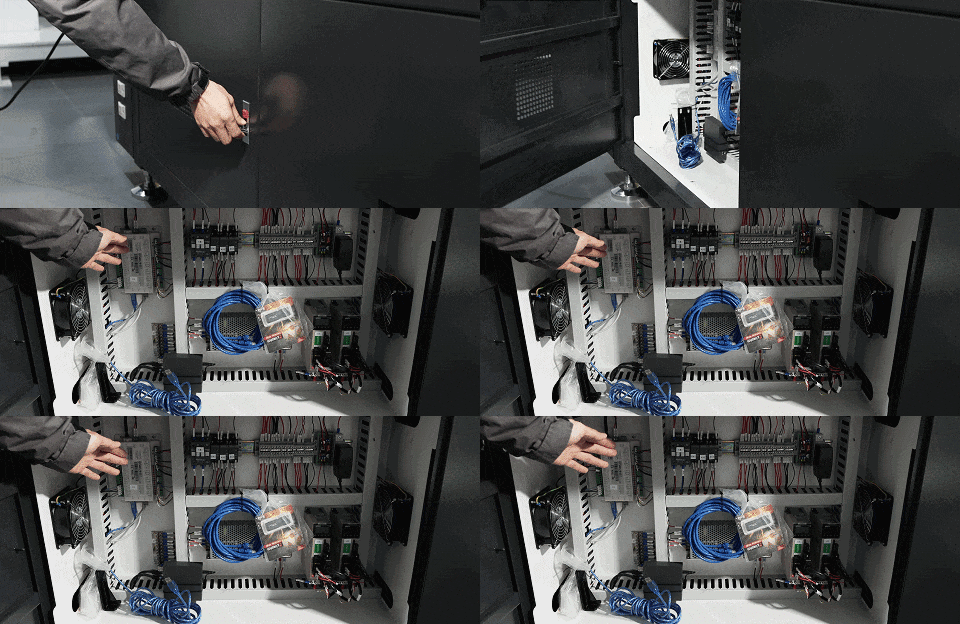
2.Inspect the Electrical System
Before starting the equipment, check the laser system’s circuitry for damage or malfunctions. Clean and organize the area around the electrical control cabinet to prevent any risk of electric shock.
A stable power supply effectively reduces the risk of electrical failures and improves the stability of equipment operation.
3.Inspect the Laser Cutting Head
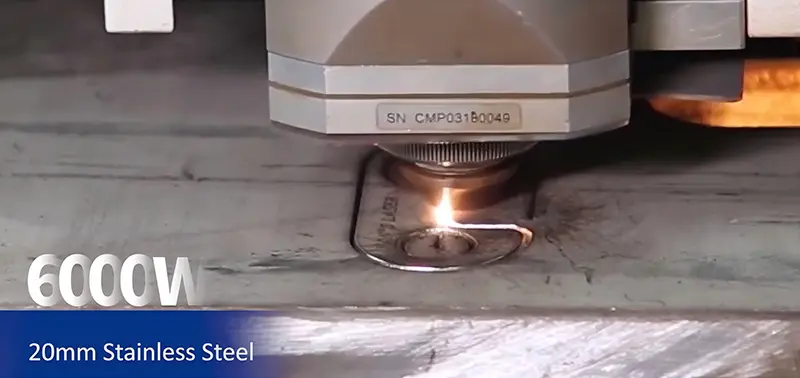
The laser cutting head directly determines cutting quality.
Before startup, it is recommended to check:
•Whether the nozzle is clean;
•Whether the protective lens is contaminated;
•Whether the focusing lens is clean;
•Whether the cutting head is securely installed;
If lens contamination is detected, clean it promptly.
II. Optical System Maintenance: Ensuring Cutting Precision
Optical components are among the most critical and precise parts of laser cutting machine; their cleanliness directly affects laser energy transmission and cutting results.
1.Clean the Reflective Mirrors
Use specialized laser lens cleaning paper to gently wipe the laser and the reflective mirrors on both sides of the equipment. For hard-to-reach areas, use a small amount of professional lens cleaning solution.
2.Clean the Focusing Lens
Keeping the focusing lens clean effectively ensures the quality of the cut surface and cutting speed.
Remove the focusing lens and blow away any dust from its surface. When cleaning the lens, use specialized cleaning paper and gently wipe from the center toward the edge in a clockwise direction. If necessary, carefully clean both sides of the lens. After cleaning, dry it with a lint-free tissue to ensure the surface is free of water marks. When reinstalling the lens, be sure to tighten it securely and adjust the focal length as needed.
III. Daily Equipment Maintenance
1.Keep the Equipment Clean
The laser cutting process generates a large amount of metal dust and slag.
Regularly clean the machine exterior and working area to prevent dust and metal debris from accumulating inside the equipment.Cleaning the guide rails and apply lubricant weekly, and regularly inspect and clean the focusing lens in the laser head.
2.Guide Rail and Rack Maintenance
Guide rails and racks directly affect the equipment’s positioning accuracy. Clean and lubricate the machine’s guide rails and racks to ensure smooth movement and cutting precision.
3.Drive System Maintenance
Inspect the drive system, including motors and gearboxes, to ensure there is no debris blocking the interior. Check the couplings between motors and gearboxes for wear and replace them as necessary to ensure smooth operation.
4.Cooling System Maintenance
Ensure the cooling system (including the coolant and cooling units) is operating normally, with no leaks, and that the coolant flows smoothly. Replace the coolant as needed to maintain efficient cooling performance.
When changing or cleaning the coolant, shut down the chiller at least 5 minutes in advance before performing maintenance operations.
5.Electrical System Maintenance
Keep the electrical system (including power supply and cables) clean and free of any obstructions or damp conditions that could corrode wires or circuit boards. Additionally, ensure a stable power supply to prevent electrical failures.
6.Daily Operational Checks
Regularly inspect the laser, cooling system, and assist gas system to ensure they are operating normally and efficiently.
7.Regular Replacement of Consumable parts
Over time, certain components will naturally wear out due to prolonged operation. It is recommended to replace lubricants, electrical system components, and consumable parts at regular intervals based on the equipment’s operating time to ensure stable operation.
8.Software and Control System Updates
Regularly check and update the software to access the latest features and ensure the machine operates with the most current settings.
9.Safety Operating Procedures
Before use, carefully read the operating manual and follow the instructions for safe and proper operation. Be sure to wear appropriate personal protective equipment. Adhering to standard operating procedures maximizes both personnel and equipment safety.
IV. Reference Table for Recommended Maintenance Intervals
|
Maintenance Item |
Recommended Frequency |
|
Clean the Cutting Table |
Daily |
|
Clean the Machine Exterior |
Daily |
|
Check Water Level and Cooling Circuit |
Daily |
|
Inspect the Laser Cutting Head |
Daily |
|
Clean the Focusing Lens and Protective Lens |
Based on usage (Weekly inspection recommended) |
|
Clean and Lubricate Guide Rails |
Weekly |
|
Inspect and Clean Filters and Radiator |
Weekly |
|
Inspect the Drive System |
Monthly |
|
Replace the Coolant |
Quarterly |
|
Inspect the Electrical System |
Quarterly |
|
Replace Wear Parts |
As Required (Based on Operating Conditions) |


 Previous



 LET’S TALK


