



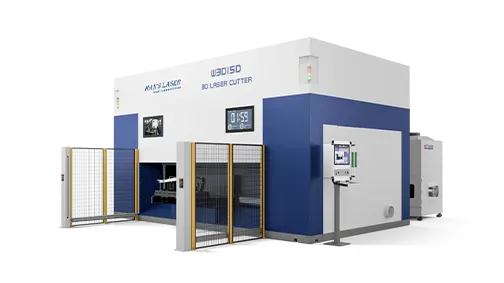


How to evaluate a 6kW laser cutter before purchase?
A practical evaluation should begin with the buyer’s actual production requirements rather than the advertised power rating. Define the material types, thickness range, part dimensions, tolerances, edge-quality requirements, daily cutting volume, gas availability, automation expectations, and service location.
Then request a sample-cut test using the same or equivalent material grades. The test should measure more than whether the machine can separate the material. It should also evaluate dimensional accuracy, edge appearance, dross, taper, piercing stability, cycle time, gas consumption, repeatability, and the condition of the finished parts after handling.
|
Evaluation area |
Questions to ask |
|
Material capability |
Which material grades and thicknesses have been validated? |
|
Quality |
What edge-quality criteria and tolerances can be documented? |
|
Productivity |
What is the complete cycle time, including piercing and repositioning? |
|
Gas system |
What purity, pressure, flow, filtration, and piping are required? |
|
Optics and head |
Which cutting head and lens configurations are included? |
|
Automation |
Can the system connect to loading, unloading, nesting, or MES software? |
|
Maintenance |
Which consumables require scheduled inspection or replacement? |
|
Service |
What commissioning, training, spare parts, and response support are included? |
The main advantages of a 6kW laser cutting machine
Higher productivity potential
Compared with lower-power configurations, a 6kW system offers more available laser energy and may support higher productivity or a wider process window in suitable applications. The actual gain depends on the complete machine configuration, including the cutting head, motion platform, gas supply, nesting software, and process database.
Flexible production
A 6kW fiber laser can switch between common metal types and thicknesses by loading material-specific programs. This flexibility can benefit job shops and manufacturers that produce varied part geometries or frequent small batches.
Complex contour capability
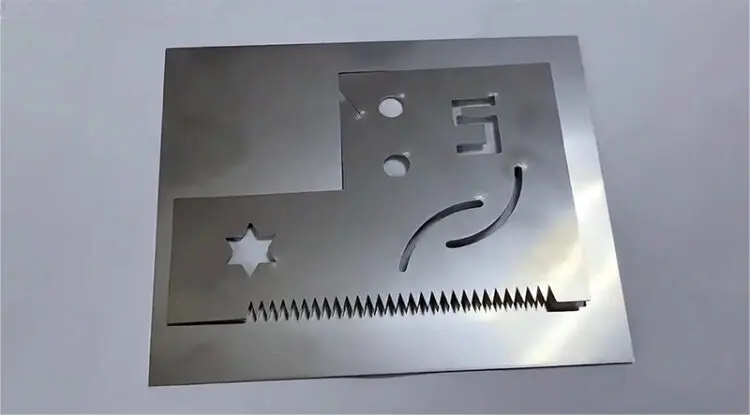
CNC laser cutting can produce intricate profiles, holes, slots, and other geometries without a dedicated punch or mechanical cutting tool for every contour. The achievable feature size and dimensional performance depend on material thickness, machine accuracy, programming, heat input, and the required tolerance.
Non-contact cutting
Because the laser does not use a blade or punch to contact the workpiece, the process avoids many forms of mechanical cutting-tool contact and wear. Consumables still require maintenance, including nozzles, protective windows, lenses, filters, and other components specified by the machine manufacturer.
Automation potential
A 6kW laser cutter can be integrated with CAD/CAM software, automatic nesting, sheet loading and unloading, production monitoring, and factory-management systems. Automation is most valuable when it reduces non-cutting time, improves material utilization, and matches the company’s batch size and production layout.
What metals can a 6kW laser cut?
|
Material |
Typical process consideration |
Common assist-gas objective |
Main quality risks |
|
Carbon steel |
Often benefits from a reactive cutting process |
Oxygen can support an exothermic reaction and increase productivity in suitable applications |
Excess oxidation, dross, excessive heat input |
|
Stainless steel |
Requires control of heat input and edge oxidation |
Nitrogen is commonly selected when a clean, oxide-reduced edge is required |
Recast material, burrs, discoloration |
|
Aluminum alloys |
Reflective and thermally conductive material requires stable coupling |
Nitrogen or clean compressed air may be selected according to thickness and quality target |
Dross, warping, unstable piercing |
|
Brass and copper |
High reflectivity and thermal conductivity make process stability important |
Nitrogen or another suitable inert-gas strategy may be used |
Back reflection, piercing instability, edge dross |
|
Titanium alloys |
Requires material-specific validation and controlled heat input |
Inert gas may help limit oxidation, subject to the application |
Oxidation, heat-affected edge, metallurgical changes |
What determines real-world cutting performance?
A machine’s real-world output is the result of several systems working together. The laser source must provide stable power, the beam-delivery path must remain clean and aligned, and the cutting head must maintain the correct stand-off distance. The motion system must follow the programmed contour smoothly, while the assist-gas system must deliver stable pressure and flow.
Material preparation is also important. Sheet flatness, surface contamination, residual stress, alloy variation, and the condition of the supporting slats can all affect the result. For repeatable production, operators should maintain a documented process database that records material, thickness, gas, nozzle, focus, speed, piercing method, and quality observations.
Conclusion
A 6kW fiber laser cutting machine can process many common industrial metals and support flexible CNC production. Its practical capability is determined by the complete system and the application-specific process window, not by the laser-source rating alone.
If you are evaluating a 6kW metal laser cutting machine, Han’s Laser can help match the laser source, cutting head, gas system, automation configuration, and process parameters to your production goals.
Frequently asked questions
Is 6kW enough for industrial metal cutting?
For many sheet-metal applications, 6kW offers a strong balance between processing flexibility and available productivity. Whether it is sufficient depends on the required material range, thickness, edge quality, production volume, and automation level. A sample-cut test is more reliable than comparing power ratings alone.
Can a 6kW fiber laser cut stainless steel and aluminum?
Yes. A correctly configured 6kW fiber laser can process stainless steel and aluminum. The machine must use suitable optics, a compatible cutting head, an appropriate assist gas, and validated material-specific parameters.
Does 6kW automatically mean faster cutting?
No. Higher power can expand the available process window, but speed also depends on material properties, gas ejection, beam quality, motion performance, piercing time, and the desired edge quality. Complete cycle time is a better productivity measure than nominal cutting speed alone.
Should I choose a 6kW or a higher-power machine?
Choose based on the material-thickness mix, required output, quality target, budget, gas infrastructure, and expected utilization. A higher-power machine may not provide a worthwhile return if most production involves thin sheet, short runs, or low machine utilization.


 Previous


 LET’S TALK


