





How to Overcome the Challenges of Thick Carbon Steel Cutting?
-LFC Laser Flame Hybrid Cutting Machine: Technology Solutions and Key Advantages
Why Is Thick Carbon Steel Cutting Becoming More Challenging?
As manufacturers move toward larger structures and heavier components, thick carbon steel processing has become a key challenge in many industries, including shipbuilding, construction machinery, and energy equipment.
Traditional thick plate cutting methods mainly include flame cutting, plasma cutting, and high-power laser cutting. However, in actual production, each process still has certain limitations:
Flame Cutting
Flame cutting offers strong penetration capability for thick plates, but cutting speeds are slow, the heat-affected zone is large, oxidation and slag are prone to occur, and cross-sectional quality and precision are limited.
Plasma Cutting
Plasma cutting efficiency is relatively high, but during the processing of thick plates, issues such as wide kerfs, rough cross-sections, and significant smoke and environmental pressure often arise.
Traditional High-Power Laser Cutting
High-power laser cutting offers clear advantages for thin to medium-thick plates, but when dealing with ultra-thick carbon steel exceeding 100 mm, challenges remain regarding cutting costs, piercing efficiency, and stability.
Therefore, achieving a solution that can cut through thick plates, improve cutting efficiency, maintain precision, and control processing costs has become a key priority for manufacturers upgrading their production capabilities.
What Is a Laser Flame Hybrid Cutting Machine?
A laser flame hybrid cutting machine is an advanced thick plate processing solution that combines fiber laser cutting technology with flame cutting technology.
The Han’s Laser LFC Series Laser Flame Hybrid Cutting Machine integrates the high energy density of laser cutting with the strong penetration capability of flame cutting, delivering outstanding performance for heavy-duty metal processing.
It can effectively replace traditional plasma and flame cutting processes while improving production efficiency, enhancing cutting quality, and reducing environmental impact caused by smoke and slag.
Core Configurations
Linear-guide bed + large-section base: Ensures rigidity under heavy loads and prevents machine vibration during thick-plate cutting.
Deeply customized Rexroth CNC system: Integrates a composite cutting process parameter library and supports automatic focusing and dynamic gas pressure adjustment.
Han’s Laser’s proprietary composite cutting head and sensors: Features built-in multi-sensor systems that monitor lens temperature, focal position, and gas pressure in real time to ensure stable, long-term operation.
Modular cutting platform: Features high load-bearing capacity, suitable for work environments involving frequent loading and unloading of heavy steel plates.
What Are the Advantages of LFC Laser Flame Hybrid Cutting Compared with Traditional Processes?
1. Stronger Thick Plate Processing Capability — Covering Thin to Ultra-Thick Plates
Traditional cutting methods usually require different machines for different thickness ranges,Laser cutting is preferred for thin plates due to its high precision and flame or plasma cutting is commonly used for thick plates due to better penetration.
Instead of relying on a single cutting method, the LFC Series uses laser-assisted flame cutting to balance penetration performance and cutting accuracy for thick carbon steel applications, enabling full-range processing from 0.6mm thin plates to over 200mm ultra-thick carbon steel plates.Especially for 100mm thick carbon steel plates, which are difficult to process stably with traditional methods, LFC enables reliable continuous production.
It also supports precision hole cutting. The minimum hole diameter can reach 0.4 times the plate thickness, meeting the requirements of complex thick plate structures and precision components.
2. Higher Thick Plate Cutting Efficiency and Lower Processing Costs
During traditional flame cutting of thick plates, manufacturers often face several challenges:
•Long piercing time
•Limited cutting speed
•Heavy post-processing workload
Pure laser processing of ultra-thick plates, on the other hand, may entail increased equipment investment and operating costs.
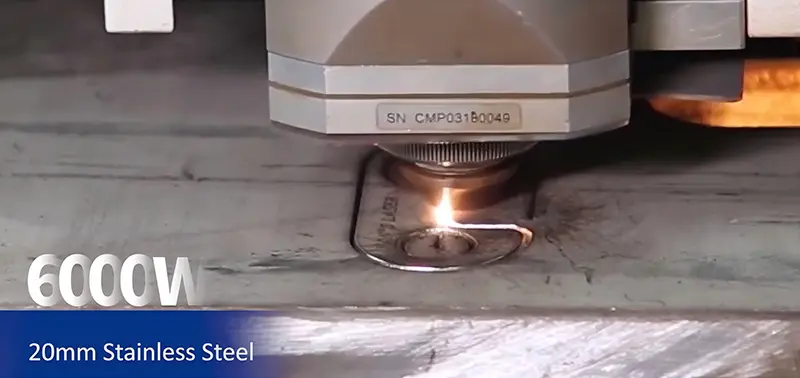
The LFC series employs a hybrid cutting method that effectively improves processing efficiency for carbon steel plates 40 mm and thicker. Actual test data shows that piercing time for 50–100 mm thick plates is only 5–15 seconds, significantly reducing auxiliary labor hours. Under equivalent power conditions (e.g., 12 kW and 20 kW), the LFC series outperforms pure laser cutting solutions of the same power in terms of cutting capability, efficiency, and cut surface quality for medium- and thick-gauge carbon steel.
3. Superior Cutting Quality and Reduced Post-Processing
During thick plate cutting, traditional flame cutting may cause:
•Significant cutting taper
•Wide kerf width
•Oxidation and slag at the bottom of the cut
•High surface roughness
The LFC Series uses laser-assisted processing technology to optimize the cutting process and improve stability during thick plate cutting.
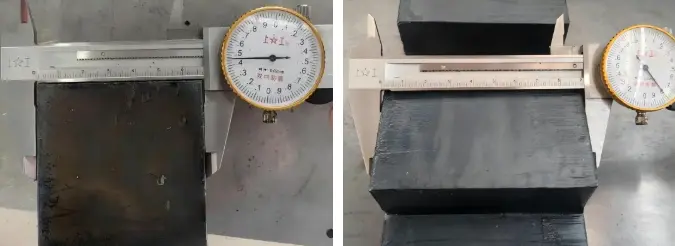
Actual Test Data:
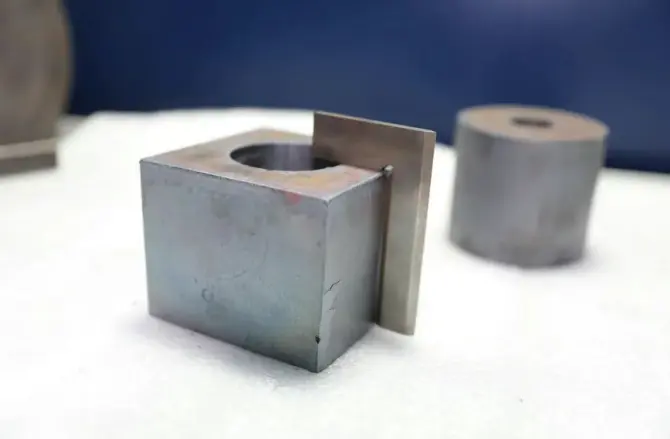
•40mm carbon steel:double-side taper ≤ 0.2mm
•90mm carbon steel:double-side taper ≤ 0.2mm
•120mm carbon steel:single-side taper ≤ 0.2mm
This significantly reduces secondary operations such as grinding and edge finishing, improving part consistency and edge finishing, improving part consistency and production efficiency. 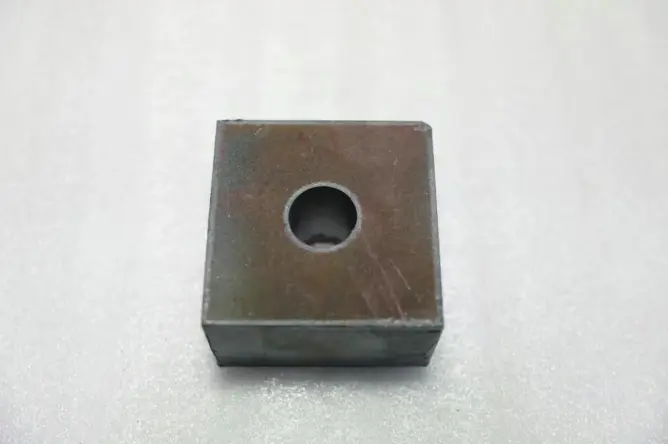
4. One Machine Replacing Multiple Cutting Processes
Traditional production lines usually require different machines to process different plate thicknesses.
The LFC Series supports three cutting modes, allowing flexible switching according to production requirements.
|
Cutting Mode |
Thickness Range |
Typical Applications |
|
Pure Laser Cutting Mode |
Carbon steel, stainless steel, aluminum, copper |
Thin plates and conventional thick plates requiring high-speed precision cutting |
|
Laser Flame Hybrid Mode (Flame-Assisted Cutting) |
30–120mm carbon steel plates |
Medium and thick plate precision mass production |
|
Flame Cutting with Laser Assistance |
120–200mm+ ultra-thick carbon steel plates |
Ultra-thick plate processing without preheating |
With three integrated cutting modes, one LFC machine can cover a wide range of production requirements, helping reduce equipment investment and factory space requirements.
5. Integrated Bevel Cutting for Higher Welding Efficiency
Traditional thick plate processing usually requires multiple steps:
Cutting → Bevel machining → Trimming → Welding
The LFC series supports bevel cutting, forming various common bevels—including A, V, X, Y, and K—in a single pass. Y and K-type bevels can achieve uniform root depth, simplifying the traditional multi-step process (involving cutting, milling, and other operations) into a single-pass operation.
Key benefits include fewer secondary operations after cutting, shorter preparation time before welding, and more consistent results in batch production.
6. High-Rigidity Structure for Heavy-Duty Continuous Processing
Thick plate cutting requires not only strong cutting capability but also long-term machine stability.
The LFC Series adopts:
•High-rigidity large-section linear guide base
•High-strength extruded aluminum beam
•Adaptive connection structure
•Modular heavy-duty cutting platform
With high load capacity and strong load-bearing capability, these features ensure the equipment’s motion accuracy during high-speed cutting and heavy-load operations, as well as long-term stability under wide-span operating conditions.
Typical Applications and Industry Solutions
Shipbuilding: Used for machining hull structural components, meeting the precision and assembly quality requirements for cutting medium- and thick-gauge plates.
Wind Power Generation: Suitable for machining thick-plate parts such as tower flanges, which require long-term, stable batch production.
Construction Machinery: Structural components such as excavator booms and dials, which often involve irregular holes and bevels.
Coal Mining Machinery: Heavy-duty components such as hydraulic supports, which involve large volumes of extra-thick plate cutting and are cost-sensitive.
Frequently Asked Questions (FAQ)
Q1: What is the difference between laser-flame hybrid cutting and pure high-power laser cutting?
A: Pure laser cutting works well for many applications, especially thin and medium-thick plates. However, when plate thickness increases, manufacturers need to consider piercing time, operating cost, and process stability.
Q2: How thick can the LFC laser-flame hybrid cutting machine cut carbon steel?
A: The LFC series can process carbon steel ranging from 0.6 mm thin sheets to ultra-thick plates exceeding 200 mm.
It can also achieve stable, continuous production for highly challenging thick plates, such as 100 mm thick carbon steel plates.
Q3: Compared to traditional plasma cutting, what environmental improvements does this method offer?
A: Cutting fumes are reduced (due to concentrated energy and minimal slag), and the machine is equipped with a dust extraction duct and filtration system to minimize emissions.
Q4: What are the advantages of laser-flame hybrid cutting over traditional flame cutting?
A: Compared to traditional flame cutting, laser-flame hybrid cutting offers:
•Better cut surface quality
•Smaller cutting taper
•Less oxidation and slag
•Lower post-processing requirements
Q5: Why is a beveling function necessary for thick plate cutting?
A: One-step beveling reduces subsequent processing steps and improves welding and assembly efficiency, making it particularly suitable for large-scale steel structures and heavy equipment manufacturing.


 Previous



 LET’S TALK


